


Most dental practices do not think they have a tracking problem until the numbers stop making sense. What usually gets blamed first is the obvious stuff. The ads must be underperforming. The budget is too low. The market is soft. The leads are bad. The front desk is not getting enough opportunities. Sometimes those explanations are right. But in a lot of practices, the bigger problem is less dramatic and more dangerous. Small disconnected changes start piling up. A phone number gets changed for consistency. A website has downtime during active campaigns. A lead source starts being classified a different way. A form stops routing properly. A chat tool gets installed without the rest of the reporting flow being reviewed. Several people touch the website, the ad account, and the tracking setup without one clear approval path. None of those changes look major on their own. But together, they can make a practice less able to see what is actually driving booked patients. That is the real issue. For a growth-minded dental office, marketing is not just about getting traffic or generating leads. It is about building a system that gives the practice enough visibility to know what is working, what is leaking, and what needs to be fixed next. Once tracking gets muddy, the practice starts managing by partial truth. That is when wasted spend goes up, wrong decisions get made, and growth gets harder than it should be. This is one of the most overlooked problems in dental marketing. Practices assume the big risk is poor campaign performance. In reality, one of the bigger risks is poor measurement and poor change control. If the data cannot be trusted from click to call to form to scheduled patient, then every optimization decision becomes less reliable. That does not just hurt the marketing team. It hurts the practice. Why small changes create big dental marketing problems Most dental offices do not break their growth systems in one major move. They chip away at clarity over time. That usually happens because the office is trying to improve something real. A team member updates the site. Someone cleans up the phone number for NAP consistency. A tool gets added to improve chat handling. A reporting workflow gets adjusted so calls can be categorized better. A campaign gets paused and restarted. On paper, none of this sounds reckless. The problem is that every change affects a system that is already interconnected. Dental marketing is not just ads. It is not just SEO. It is not just the website. It is not just call tracking. It is the entire revenue chain working together: the traffic source the landing page or website page the lead capture path the phone routing setup the form handling flow the chat or AI follow-up experience the reporting layer the scheduling process inside the office the final conversion into a kept appointment and an accepted case When people make changes to one part of that chain without checking the downstream impact, the office can lose visibility without realizing it. This is why a practice may feel like marketing is getting harder even when lead volume looks similar. The issue may not be that demand disappeared. The issue may be that the practice can no longer cleanly see which channels are driving calls, which leads are real opportunities, and which parts of the system are quietly dropping patients before they book. The danger is not just confusion. The danger is false confidence. Once a report starts looking cleaner than reality, the office becomes more likely to trust the wrong conclusions. What website downtime really costs a dental practice Website downtime is usually treated like a technical inconvenience. It is more serious than that. For a dental practice running active Google Ads, Meta Ads, local SEO campaigns, or branded search traffic, the website is not just an online brochure. It is part of the lead intake system. When the site is down, unstable, hacked, loading incorrectly, or partially broken, the office is not just dealing with an IT problem. It is dealing with a revenue interruption. Think through the chain reaction. A paid campaign keeps spending. Search demand still exists. Patients still click. But the landing experience is weak, broken, or unavailable. What happens next? Some users leave immediately. Some do not trust the brand enough to continue. Some never make it to the phone number or contact form. Some try again later and are lost to a competitor. Some convert through another path that is harder to attribute back to the original source. That means downtime can distort both performance and reporting at the same time. The performance hit is obvious: fewer conversions. The reporting hit is less obvious: a less accurate picture of how channels actually influenced patient action. For dental practices, this matters even more because treatment decisions are often high intent and time-sensitive. A patient looking for veneers, emergency dentistry, sedation, implants, or a second opinion may not come back later just because the site was unavailable for a few hours. That patient may move on. This is why website reliability should be treated like part of growth infrastructure, not a side issue. If a practice is actively investing in marketing, the website has to be protected like a business-critical asset. That means: uptime monitoring security controls change logs a clear owner for site edits fast rollback capability a process for checking forms, chat, and phone visibility after updates A practice that spends thousands on traffic but does not protect the website experience is leaving too much to chance. Why phone number changes and NAP cleanup can create attribution problems Dental practices are often told to keep their business name, address, and phone number consistent across the web. That advice is generally correct. NAP consistency matters for local visibility. But there is an important nuance. If the office changes phone-number usage on the website without understanding how the tracking setup works, it can create a different kind of problem: attribution drift. This happens when a practice has call tracking, dynamic number insertion, multiple source-based phone numbers, or conversion routing that depends on a specific configuration. A well-intentioned change to “clean things up” can accidentally break how calls are being attributed. Then the office sees one or more of these issues: direct calls do not get captured properly leads show up under the wrong source a “null” or unknown category grows reporting no longer reflects the actual patient path certain campaigns start looking weaker or stronger than they really are That is a serious issue because the office will often respond to the report, not the root cause. If paid search suddenly looks worse, the assumption may be that the ads declined. If organic seems soft, the office may question SEO. If call volumes appear to shift, the team may change budgets or messaging. But what if the real problem is that the underlying attribution map is now broken? This is where a lot of offices make expensive mistakes. They optimize around reporting artifacts instead of real behavior. Local SEO best practice and call-tracking best practice both matter. The answer is not to ignore one in favor of the other. The answer is to manage the tradeoff intentionally. A growth-minded dental practice should ask: Which phone number is being shown where? Which systems rely on that number to record source data? What happens to attribution if we standardize or replace it? Have we tested calls from multiple source paths after the change? Who approved the update, and was the marketing/tracking owner involved? Those are not overcomplicated questions. They are basic control questions. Practices that ask them early avoid a lot of downstream confusion. Why a better conversion rate does not always mean better performance One of the easiest ways to misread dental marketing is to celebrate a cleaner metric without asking what changed underneath it. A practice sees a higher conversion rate and assumes improvement. That seems logical. But it is only valid if the definition, classification, and capture method stayed consistent. If call outcomes are being labeled differently, if certain interactions are excluded, if low-quality calls are filtered in a new way, or if lead categories are being managed more tightly by hand, the conversion rate can improve on paper without the actual process improving in real life. That does not mean the metric is useless. It means the metric needs context. This is especially important in dental because the gap between a reported lead and a real revenue opportunity is large. A click is not a call. A call is not a qualified lead. A qualified lead is not a scheduled patient. A scheduled patient is not a show. A show is not a treatment acceptance. When offices skip over that chain, they become vulnerable to vanity wins. A higher conversion rate can mean: better campaign targeting a stronger landing page improved front-end offer fit tighter call classification narrower definitions broken or changed reporting logic less noise in the denominator Some of those are real improvements. Some are reporting improvements. Some are measurement distortions. A good operator wants to know which one happened. This is where Xpress-style thinking matters. The goal is not to chase good-looking dashboards. The goal is to understand what moved revenue. If a practice is seeing a performance spike, the right first question is not “How do we celebrate this?” The right first question is “What changed, and how confident are we that this reflects actual improvement?” That mindset protects the practice from false optimism. Why change control matters more than most dental offices think A lot of dental practices do not have a change-control problem because they are careless. They have it because they are busy. The owner is focused on production. The office manager is solving daily fires. The front desk is buried in phones and patients. A vendor is adjusting ad settings. Someone on the website side wants to clean up messaging. A team member changes a plug-in or contact point. A new tool gets tested. Individually, these are normal business actions. The problem is that no one is acting as the final gatekeeper over the full growth system. Without that gate, the office ends up with: multiple people making edits inconsistent communication unclear ownership of outcomes surprise changes to site content or contact paths reporting discrepancies that surface too late finger-pointing when results shift Change control sounds bureaucratic until you compare it to the alternative. The alternative is making business decisions from a system that several people keep altering independently. For a dental office, change control does not have to be complicated. It just has to be disciplined. A simple process can solve most of this: One person owns final approval for website and campaign-impacting changes. Every proposed change gets routed through that person before launch. Anything touching phone numbers, forms, chat, conversion tracking, or landing pages gets tested after the update. The office logs what changed and when. Reporting shifts get reviewed against the timing of those changes. That does not slow growth down. It protects growth. Practices that skip change control usually think they are moving faster. In reality, they are often creating invisible rework. Weeks later, the team is trying to diagnose why reporting no longer matches reality, why lead quality appears different, or why channel performance suddenly looks off. That is a preventable problem. The real goal is not more reports. It is clearer operational truth. A lot of marketing conversations drift toward dashboards because dashboards are easier to look at than operations. But dental growth does not happen inside reports. It happens inside a messy chain of marketing, lead handling, scheduling, showing, presenting, and case acceptance. That is why the best-performing practices usually do not just ask, “How many leads did we get?” They ask better questions: Which channels are producing qualified opportunities? Which service lines are generating the right patients? Where are leads leaking out? Are calls being answered the right way? Are forms getting fast follow-up? Are chats being handled properly? Are we measuring booked patients or just inquiries? What changed in the system before this trend appeared? Those questions produce better decisions because they connect marketing to operations. This matters a lot in dental because many growth issues are not caused by one bad tactic. They are caused by friction across the system. Traffic might be fine. The offer might be fine. The site might even be decent. But if the attribution is unclear, the office phone handling is uneven, and the reporting definitions keep shifting, the practice will still struggle to know what to fix first. That is why clean systems are a competitive advantage. Not because they look impressive. Because they reduce wasted motion. When a practice has cleaner tracking, clearer ownership, and more disciplined changes, it can move faster with better judgment. It knows which campaigns deserve more budget. It knows which pages or offers need work. It knows when a drop is real and when the measurement is suspect. It knows whether the problem is traffic, conversion, follow-up, or attribution. That is how growth becomes more controlled. What growth-minded dental practices should do next If this article sounds familiar, the answer is not to panic. The answer is to tighten the system. Start with a practical review. 1. Audit the current tracking path Map how a patient gets from click to contact to scheduled appointment. Review: paid search call tracking website phone-number behavior form routing chat and chatbot paths Google Ads conversion setup CRM or call-tracking platform classifications reporting categories that include “unknown,” “null,” or direct traffic You are looking for gaps, not perfection. 2. Review recent changes before diagnosing channel performance Before concluding that ads, SEO, or lead quality changed, ask what changed operationally. Check: website edits security incidents or downtime plug-in changes phone-number swaps tracking script changes lead-source classification updates campaign restructuring This single habit can prevent a lot of false conclusions. 3. Set a change-control owner Pick one point person who must approve anything that affects the website, contact paths, tracking, or campaign structure. That person does not need to do every task. They need to control the sequence and protect the integrity of the system. 4. Stop treating reported leads as the final success metric Track deeper into the process. If possible, separate: inquiries qualified leads scheduled patients show rate treatment acceptance by service line The more the office can connect marketing to actual booked and kept opportunities, the better its decisions will be. 5. Protect the website like growth infrastructure If the site is supporting active lead flow, treat uptime, security, and form functionality as operational priorities. A broken or unstable site does not just hurt branding. It disrupts revenue capture. 6. Question “good news” with the same rigor as bad news When a metric improves, do not just ask what went right. Ask what changed. The practices that grow most steadily are the ones that investigate positive anomalies just as seriously as negative ones. Final takeaway Most dental marketing problems do not start with one catastrophic mistake. They start with small changes that make the system harder to trust. A website goes down. A phone setup changes. A reporting method shifts. A team cleans up one detail without checking the effect on attribution. Different people make disconnected decisions in different systems. Then the practice is left trying to judge performance with blurred visibility. That is when marketing starts to feel unpredictable. Not because growth is impossible. Because the office is trying to optimize from incomplete truth. The practices that win long-term are usually not the ones with the flashiest campaigns. They are the ones with cleaner systems, tighter change control, better attribution discipline, and a stronger connection between marketing activity and real patient outcomes. That is the standard worth building toward.
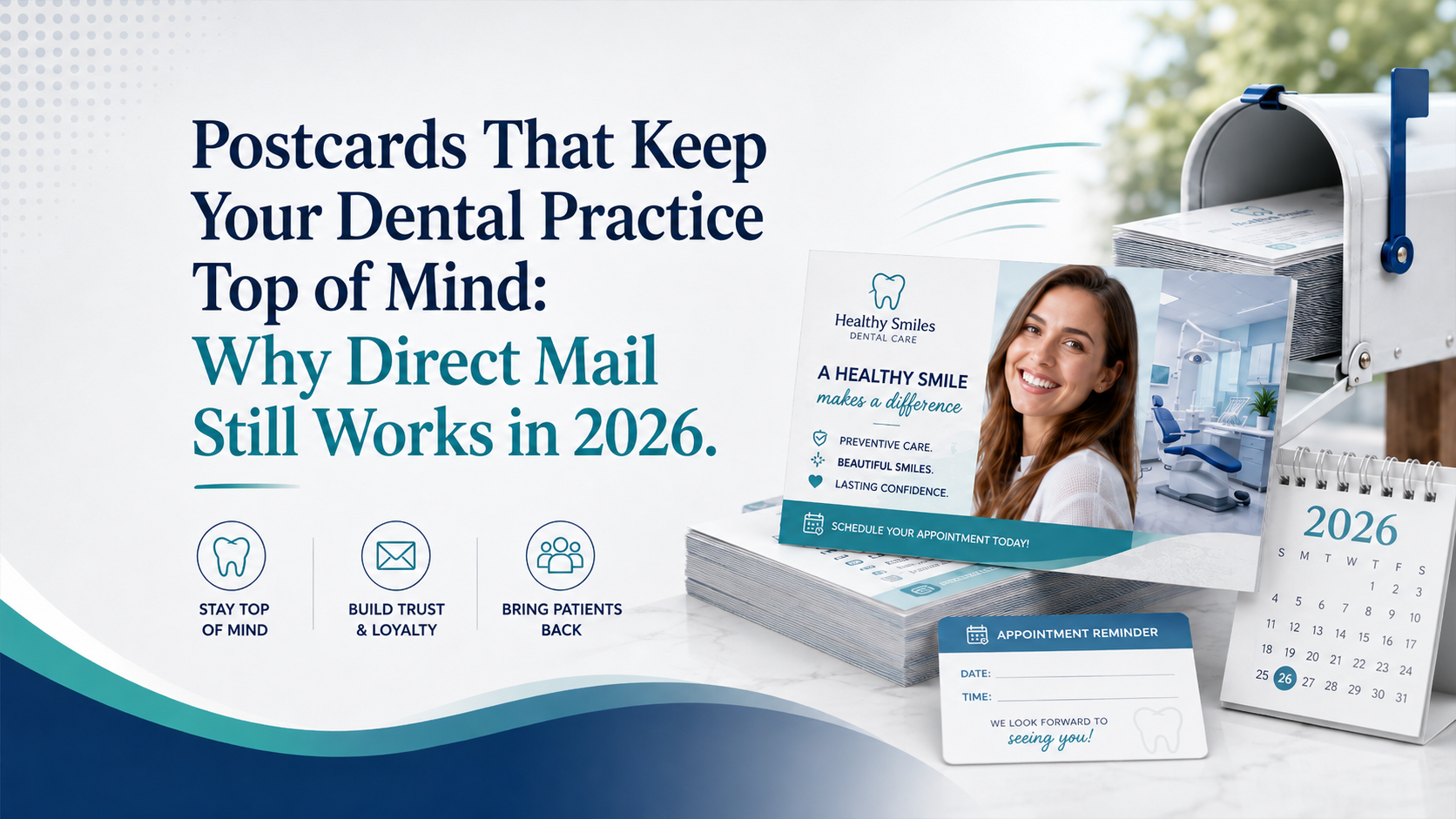
Discover how direct mail postcards help dental practices build brand recognition, attract new patients, and stay top of mind. Learn why postcards remain one of the most effective local marketing tools.

From the desk of Shawn Kimmel

Why New Movers Matter in Dental Marketing
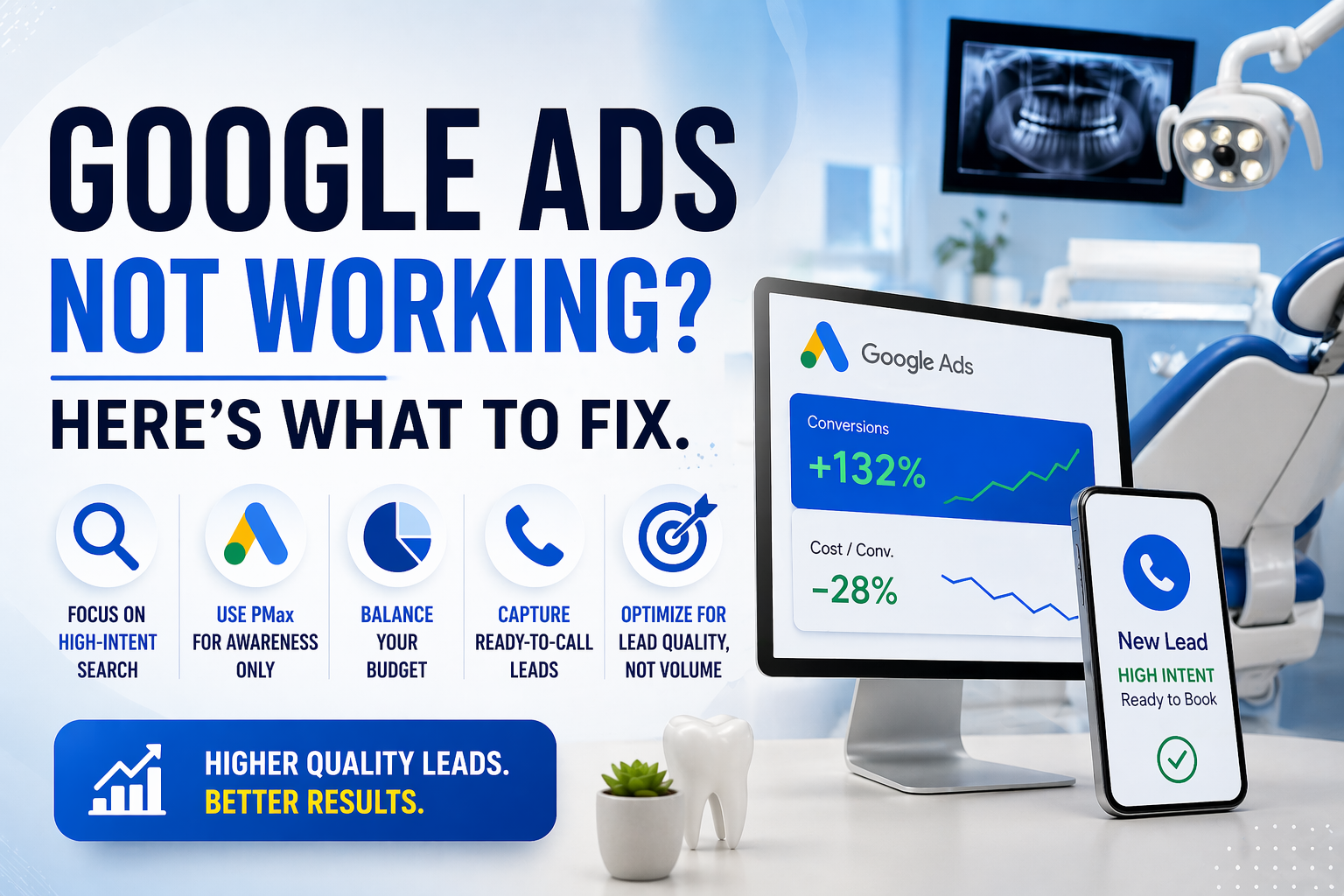
If your Google Ads campaigns aren’t delivering results , you’re not alone. Many dental practices are seeing rising costs, increased competition, and fewer qualified leads. But here’s the truth: Google Ads still works extremely well for dental practices—when it’s built and optimized correctly. If your campaigns feel like they’ve slowed down or stopped producing, it’s usually not the platform. It’s the strategy behind it . Why Are Google Ads Not Working for Dentists? (Quick Answer) Google Ads typically fails when campaigns focus on low-intent traffic, poor budget allocation, and lack of conversion optimization. Practices that succeed focus on high-intent search traffic, strong landing pages, and clear conversion paths . Where Most Dental Google Ads Campaigns Go Wrong 1. Over-Reliance on Low-Intent Channels Many practices invest heavily in display ads, YouTube, or broad targeting campaigns. While these can increase visibility, they rarely generate ready-to-book patients . Problem: You’re paying for attention, not action. 2. Too Much Budget in Awareness Campaigns Brand awareness has its place—but most dental practices don’t need to prioritize it. If a large portion of your budget is going toward awareness: You’ll see impressions Maybe clicks But very few real leads 3. Heavy Dependence on Performance Max Campaigns Performance Max campaigns can be useful—but they’re often overused. Common issue: Limited control over targeting Mixed intent traffic Harder to optimize for quality leads Used alone, they can drain budget without delivering strong ROI. 4. No Conversion-Focused Strategy Clicks don’t mean anything without conversions. Many campaigns fail because: Landing pages aren’t optimized No strong call-to-action No clear next step for the patient 5. No Clear Path for High-Intent Leads If someone searches: “Emergency dentist near me” “Dental implants cost” They’re ready to act. But if your campaign doesn’t: Prioritize these keywords Direct them to the right page Offer an immediate way to contact you You lose the lead. What Actually Works in Dental Google Ads 1. Prioritize High-Intent Google Search Campaigns Search campaigns targeting keywords like: “Dentist near me” “Emergency dentist [city]” “Dental implants [location]” These capture users actively looking for care right now . This is where the highest ROI lives. 2. Use Performance Max the Right Way Instead of relying on it fully: Use it as support for awareness Retarget previous visitors Reinforce your brand presence Think of it as a supporting channel , not the foundation. 3. Balance Your Budget Strategically A strong setup typically looks like: Majority in Search (high intent) Smaller portion in retargeting Minimal spend on awareness This ensures your budget is aligned with patient acquisition—not just visibility . 4. Add Call-Focused Campaigns Many patients don’t want to fill out forms. They want to call immediately . Call-focused campaigns: Capture urgent patients Increase conversion speed Improve lead quality Especially effective for: Emergency dentistry Same-day appointments 5. Optimize for Lead Quality—Not Just Volume More leads ≠ better results. You want: Patients who show up Patients who accept treatment Patients who can afford care This means: Refining keywords Filtering traffic Improving targeting How to Generate High-Intent Dental Leads with Google Ads If you want consistent results, your campaigns should be built around: Search-first strategy Location-based targeting Service-specific landing pages Strong offers or incentives Clear calls-to-action (Call Now, Book Appointment) Every part of your funnel should guide the user toward taking action quickly . The Real Shift in Google Ads Strategy Google Ads is no longer about: Getting as many eyes as possible. It’s about: Showing up at the exact moment a patient is ready to book. That’s the difference between: Wasting budget vs. Filling your schedule Signs Your Google Ads Campaign Needs Fixing If you’re experiencing any of the following, your setup likely needs adjustment: High cost per lead Low conversion rates Lots of clicks but few calls Poor-quality leads Patients not showing up These are all indicators of a strategy issue—not a platform issue . Ready to Improve Your Google Ads Results? If your campaigns aren’t performing the way they should, there are likely missed opportunities in your setup . From keyword targeting to landing page optimization, small changes can make a significant impact on: Lead quality Conversion rate Cost per patient Next Step: Fix Your Strategy Want to go deeper into building a system that actually works? Final Takeaway Google Ads is still one of the most powerful tools for dental practices. But success comes down to: Strategy Structure Intent If your campaigns aren’t working, don’t abandon the platform. Fix the foundation—and the results will follow.

You have built something impressive. Your dental practice is producing between $1 million and $3 million annually. You are no longer a beginner. You are established, you are producing, and you have a footprint in your community. However, for many dentists in this bracket, growth starts to feel inconsistent. You might have a record-breaking month followed by a period where things feel tight. This inconsistency is the primary reason many successful practices stall. To move from the $2 million mark toward $4 million and beyond, you have to change your approach from "doing marketing" to "running a growth system." What Actually Moves a Dental Practice Forward Real growth does not come from chasing the latest random marketing tactic. It comes from implementing systems that drive measurable results. If you want to break through your current ceiling, your strategy must focus on four key areas: Consistent New Patient Flow: You need a steady stream of patients rather than occasional spikes that stress your capacity. Stronger Case Acceptance: The goal is high-value treatment starts, not just a high volume of leads. Production Tracking: You must have systems that track actual production and revenue instead of just counting website clicks. Strategic Expansion: Your marketing should actively support hiring new associates, expanding your office, or focusing on higher-end dentistry like implants and full-mouth reconstructions. At Xpress Promotion, we do not guess. We focus on the data to measure what actually produces revenue for your chairs. The Xpress Growth System We have developed a two-phase approach designed specifically for established practices that are ready to scale. Phase 1: Stabilize Patient Flow This phase uses a combination of targeted postcards and paid digital ads to create a foundation of predictability. Predictable Volume: We create a "faucet" of new patients that you can rely on month after month. End-to-End Tracking: We track the entire journey from the initial lead to the scheduled appointment, the arrival, and the final production value. Phase 2: Strengthen Market Position Once your flow is stable, we focus on long-term authority through high-end websites, SEO, and authority content. Upgrade Perception: We ensure your online presence matches the high quality of your clinical work. Increase Case Value: By building authority, you attract patients who are looking for expertise rather than just the lowest price. Search Dominance: We build long-term dominance in local search results so you remain the top choice in your area. Ready to Move from $2M to $4M+? If you are tired of inconsistent months and "random acts of marketing," it is time for a change. You do not need more tactics. You need tracking, you need systems, and you need a growth strategy built for scale. At Xpress Promotion, we help established practices bridge the gap between where they are and where they want to be.
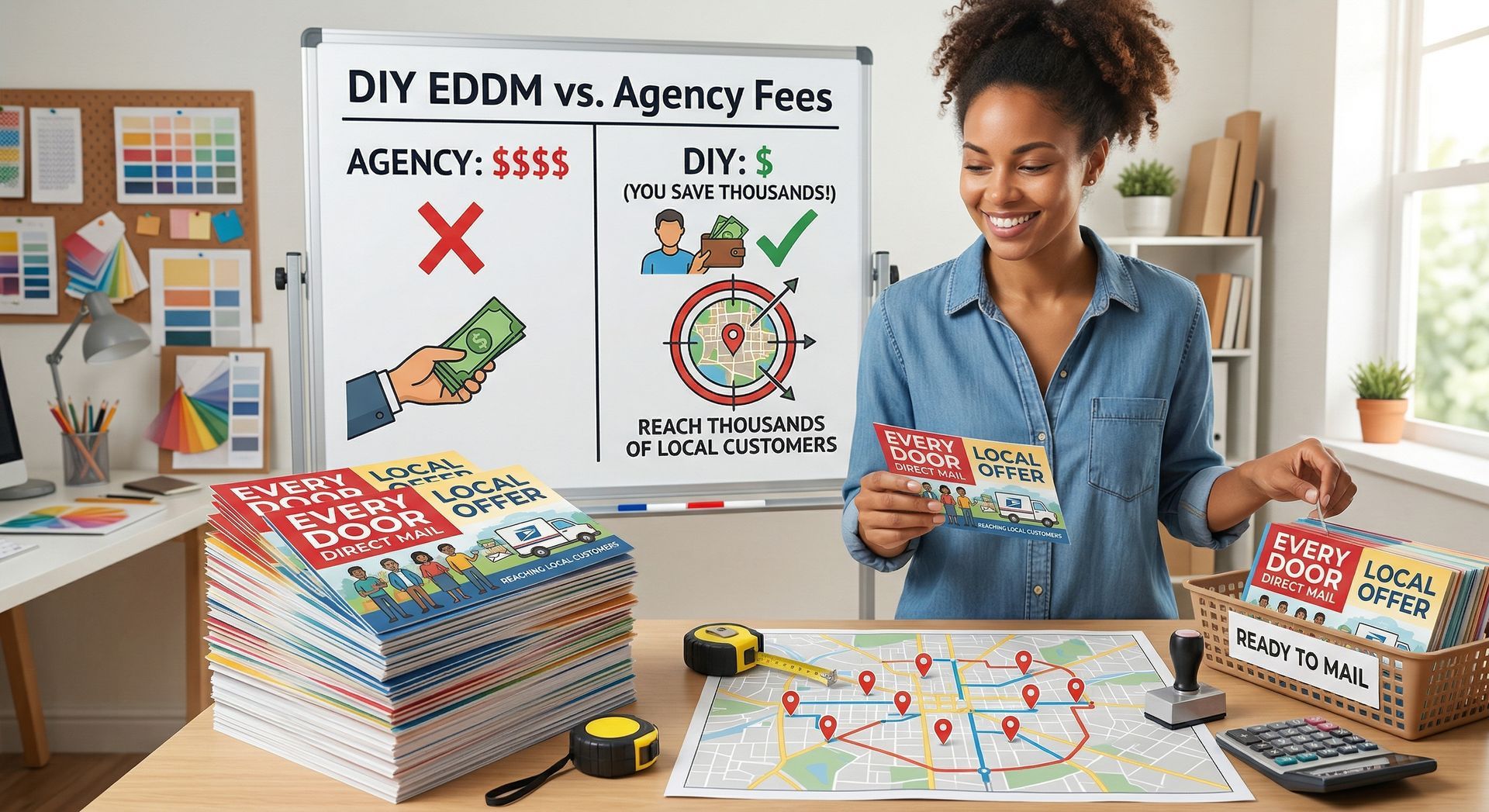
Direct mail has evolved—but it has not disappeared. In fact, for local businesses trying to reach nearby customers, Every Door Direct Mail (EDDM) remains one of the most powerful and cost-effective marketing channels available. While many businesses assume direct mail is outdated or expensive, the reality is different. When executed correctly, EDDM can generate consistent awareness, phone calls, website visits, and booked appointments. Even better, businesses can now take a DIY approach to EDDM, allowing them to reduce costs while maintaining professional, high-converting campaigns. This guide explains what EDDM is, why it still works, and how a DIY approach can help businesses achieve strong marketing results without relying on expensive agencies. What Is Every Door Direct Mail (EDDM)? Every Door Direct Mail (EDDM) is a service offered by the United States Postal Service (USPS) that allows businesses to send mailers to every address within specific postal routes—without needing individual names or mailing lists. Instead of purchasing expensive mailing lists, businesses can select neighborhoods based on: Geographic location ZIP codes Carrier routes Demographic targeting through route selection This makes EDDM ideal for local businesses such as dental practices, medical offices, restaurants, gyms, home service providers, and retail stores that want to reach customers within their service area. Unlike digital ads that rely on algorithms and competition, EDDM delivers physical marketing directly into customers’ hands. Why EDDM Still Works Today Many businesses assume digital marketing has replaced direct mail. However, physical mail offers advantages that digital ads cannot replicate. First, direct mail has significantly less competition. Most consumers receive dozens of digital ads daily, but far fewer physical mail pieces. This increases visibility and attention. Second, physical mail creates stronger recall. Studies consistently show that tangible marketing materials are easier to remember than digital impressions. Third, EDDM reaches entire neighborhoods. Instead of relying on algorithms to decide who sees an ad, EDDM ensures that every household within the selected routes receives the message. Most importantly, direct mail reaches people outside of digital platforms—including homeowners and higher-value customers who may not engage heavily with online ads. When messaging, design, and targeting are executed correctly, EDDM can generate measurable and predictable results. Poor Results Due to Weak Strategy or Design A common problem is poor performance caused by ineffective messaging or design. Common mistakes include: Generic messaging that fails to attract attention Poor visual hierarchy Lack of a clear call-to-action Weak or confusing offers Targeting areas that do not match the business’s ideal customers EDDM is not effective simply because it reaches many homes. It is effective when it delivers a clear, compelling message that motivates recipients to take action. Without proper strategy, even large mail campaigns can fail to produce meaningful results. What Is DIY EDDM? DIY EDDM is the process of planning, designing, and executing an Every Door Direct Mail campaign without relying on a full-service marketing agency. Instead of paying agency fees, businesses handle key components themselves, including: Route selection Messaging and offers Design coordination Printing coordination USPS drop-off or submission This approach dramatically reduces costs while allowing businesses to maintain complete control over their campaigns. DIY EDDM does not mean sacrificing quality. With the right strategy and professional design, businesses can achieve agency-level results at a fraction of the cost. How DIY EDDM Saves Businesses Money The primary cost savings come from eliminating unnecessary agency markups. When businesses execute EDDM themselves, they only pay for: Printing Postage Optional design services (if needed) This removes management fees and markups that agencies often add. As a result, businesses can: Mail more homes with the same budget Run campaigns more frequently Test different offers and messaging Improve performance over time Instead of spending marketing budgets on management fees, more of the investment goes directly toward reaching customers. Maintaining Professional, High-Converting Messaging One of the biggest concerns businesses have about DIY EDDM is maintaining professional quality. The success of EDDM depends heavily on how the mailer is designed and written. Effective mailers include: Clear, benefit-focused messaging Strong visual hierarchy Professional design Compelling offers Clear calls-to-action Easy-to-read layout The goal is not simply to inform—but to motivate action. Professional messaging ensures the mailer communicates value quickly and clearly, increasing the likelihood that recipients will respond. Key Benefits of DIY EDDM Lower Production Costs DIY EDDM significantly reduces marketing expenses by removing agency management fees and markups. This allows businesses to allocate more budget toward printing and mailing, increasing total reach. Lower costs also make it possible to run campaigns consistently, which improves brand awareness and long-term results. Consistency is one of the most important factors in successful direct mail campaigns. Full Control Over Timing and Messaging DIY EDDM gives businesses complete control over when and how campaigns are executed. Businesses can launch campaigns around: Seasonal promotions Grand openings New service launches Limited-time offers Slow seasons that require increased marketing This flexibility ensures marketing aligns with business goals rather than agency timelines. Businesses can also adjust messaging quickly based on performance and feedback. Ideal for Awareness, Promotions, and Seasonal Campaigns EDDM is highly effective for building awareness within specific neighborhoods. It works particularly well for: New business launches Service promotions Special offers Seasonal campaigns Event announcements Brand awareness campaigns Because EDDM reaches entire neighborhoods, it ensures consistent exposure. Even recipients who do not respond immediately become familiar with the business, increasing the likelihood of future engagement. Designed to Drive Calls, Clicks, and Bookings The ultimate goal of EDDM is to generate measurable action. When designed correctly, mailers can drive: Phone calls Website visits Appointment bookings Store visits Service inquiries This is achieved through clear calls-to-action, compelling offers, and strong visual design. EDDM is not just about visibility—it is about generating real business results. Why Message, Design, and Targeting Determine Results Many businesses assume direct mail success depends only on how many homes receive the mailer. In reality, results depend heavily on three key factors: 1. Message The message must clearly communicate value. Recipients should quickly understand: What the business offers Why it matters to them Why they should act now Strong messaging focuses on benefits, not just features. 2. Design Design plays a critical role in capturing attention and guiding the reader. Effective design includes: Clear headlines Professional visuals Strong contrast Easy-to-scan layout Clear call-to-action Poor design can cause recipients to ignore the mailer—even if the offer is strong. Professional design increases credibility and response rates. 3. Targeting Targeting ensures the mailer reaches the right audience. Businesses should select routes based on: Proximity to the business Ideal customer demographics Household income ranges Homeownership rates Mailing to the wrong areas reduces effectiveness and wastes budget. Strategic targeting improves return on investment. Strategic Design Is What Turns Mail Into Conversions Design is not just about appearance—it is about performance. Conversion-focused design ensures recipients: Notice the mailer Understand the message quickly Feel motivated to respond Know exactly what action to take Effective mailers use: Clear hierarchy Attention-grabbing headlines Benefit-focused messaging Simple, clean layouts Strong calls-to-action Every element works together to guide the reader toward taking action. Without strategic design, even the best offers may fail to generate results. DIY EDDM Allows Businesses to Compete and Grow DIY Every Door Direct Mail empowers businesses to take control of their local marketing. Instead of relying on expensive agencies, businesses can reach thousands of potential customers at a lower cost while maintaining professional quality. By focusing on strong messaging, strategic design, and proper targeting, businesses can generate real, measurable growth through direct mail. EDDM remains one of the most reliable ways to build local awareness, attract new customers, and increase bookings. With the right approach, DIY EDDM transforms direct mail from a costly expense into a powerful and scalable marketing tool.